
Buddhism holds a central position in the cultural and spiritual identity of Laos, the Lao People’s Democratic Republic (PDR). With a rich history deeply intertwined with the nation’s heritage, Buddhism has profoundly influenced Laotian society, shaping its values, traditions, and religious practices.
Laos currently has a population of approximately 7 million people, with 70-80 percent of whom following Buddhism. A minority of ethnic groups believe in Tantric or Esoteric norms, animist beliefs, and other religions such as Bahai, Christianity, and Islam. According to Central Buddhist Fellowship Organization of Lao (CBFOL) annually report by the end of 2023, the total amount of Lao nationals who have taken on monastic life is now estimated at 23.311 thousand.
Buddhism was introduced to Laos around the 7th century CE, primarily through interactions with Indian and Khmer traders and missionaries. Over the centuries, Theravada Buddhism became the dominant tradition in Laos, deeply ingrained in the lives of the Laotian people.
According to Lao history, in B.E. 1899 or C.E. 1356, King Fa Ngoum, Great, had been on the throne for three years. He brought Langkavong Theravada Buddhism from the kingdom of Khmer to disseminate through the kingdom of Lanxang (present-day Laos).
Theravada Buddhism is the predominant sect practiced in Laos, emphasising the teachings of the Pali Canon and the importance of individual spiritual development and enlightenment. Laotian Buddhism also incorporates animist and folk beliefs, reflecting a syncretic blend of religious traditions.
Buddhist festivals play a significant role in Laotian culture, marking important religious and cultural occasions. The most celebrated festival is Bun Pi Mai, the Lao New Year, which includes religious rituals, merit-making activities, and festive gatherings. Other festivals, such as Bun Pha Wet and Bun Khao Phansa, are observed with devotion and reverence.
In order to follow the Buddha’s words, Lao Buddhist monks were assigned to translate the Buddha's teachings, which mostly were Pali versions, into Lao versions. Therefore, senior monks carried out the mission of translations onto palm leaves first. Next, they wrote into the book, which is commonly known as Tripitaka (Lao: ພຣະໄຕຣປີດົກ). It is classified into three stages of scriptures, namely:
At present, under the attentive guidelines and lead of CBFOL, Committees for Tripitaka responsibility was directly assigned to correct and fulfill "Laos Sangha Tripitaka" (ພຣະໄຕຣ ປີດົກສະບັບສົງລາວ).
Laos currently consists of 5.429 temples across the country, while 4.697 temples in where Buddhist monks dwell and 732 abandoned temples. However, there are about 7 well-known and historic temples, namely:
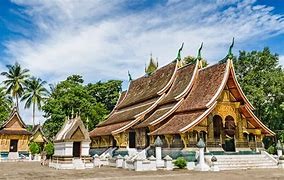
Wat Xieng Thong (Lao: ວ ັ ດ ຊ ຽ ງ ທ ອ ງ, pronounced [wāt síaŋ.tʰɔ́ ːŋ]; "Temple of the Golden City") is a Buddhist temple (vat or wat) on the northern tip of the peninsula of Luang Prabang, Laos Built between 1559 and 1560 by King Setthathirath, Wat Xieng Thong is one of the most important of Lao monasteries and remains a significant monument to the spirit of religion, royalty and traditional art
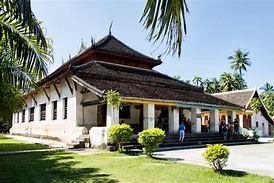
Wat (Temple) Visounnalat was originally built during the reign of King Wisunarat (or Vixoun, 1501-1520) in 1513 (some suggest 1512) and represents the earliest style, sometimes referred to as Luang Prabang Style I, of Lao temple architecture
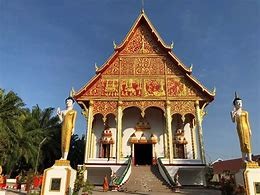
Wat That Luang Neua is classic Laos style Buddhist temple with three particular points of interest. The first is the main temple building, the entrance to which is flanked on both sides by statues of the Lord Buddha in a standing position. The front gable end of the roof features highly elaborated golden stencil work. The inside of the temple building is also colorfully decorated with many murals depicting scenes from the life of the Lord Buddha.
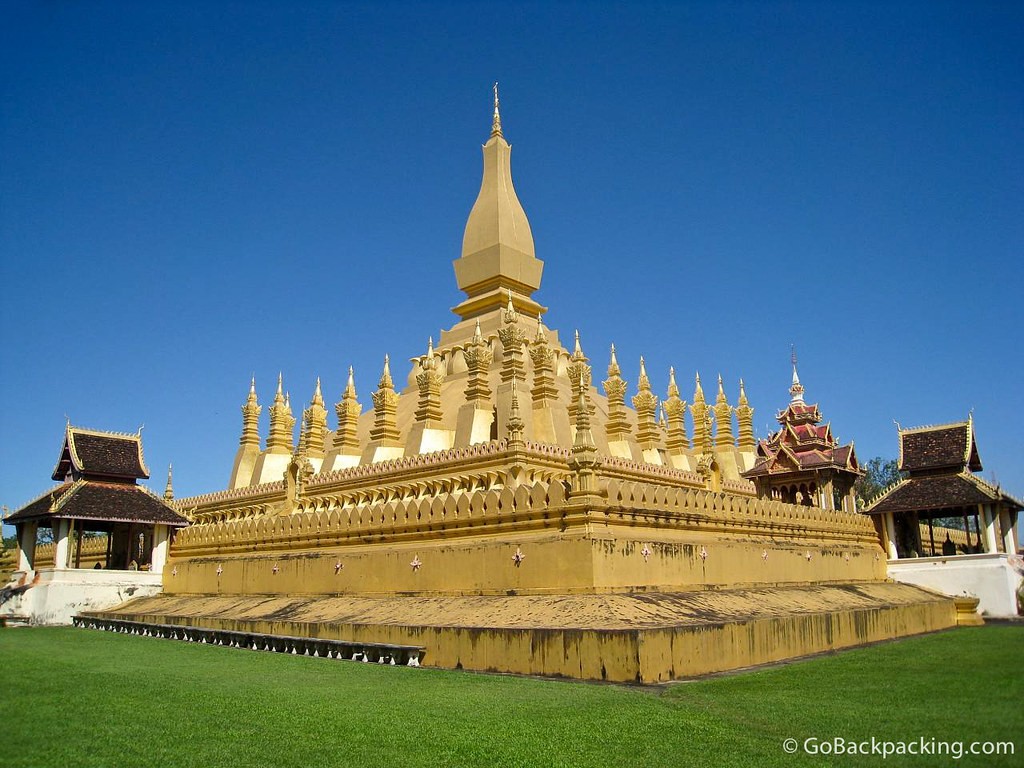
That Lung stupa is a national symbol Laos, which is situated inside Wat That Luang Neua. The original stupa was built on the site in 1566 by King Saysetthathirath, and was restored in 1953. The golden stupa is 45 meters tall and is believed to contain a relic of the Lord Buddha. The gold centerpiece of this stupa echoes the curve of an elongated Lotus bud. Only the pinnacle is covered in real gold, the remainder of the stupa is painted a gold color. Today it is the most important national cultural monument in Laos
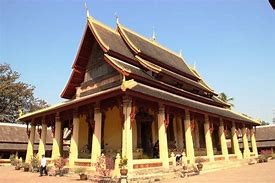
Wat Si Saket in Vientiane Capita, It was built in 1818 on the order of King Anouvong (Sethathirath V.) Si is derived from the Sanskrit title of veneration Sri, prefixed to the name of Wat Saket in Bangkok, which was renamed by Anouvong's contemporary, King Rama I. Wat Si Saket was built in a contemporary style of Buddhist architecture at the time, with a surrounding terrace and an ornate five-tiered roof, which may have kept it safe, since the armies of Siam that sacked Vientiane following Anouvong's rebellion in 1827 used the compound as their headquarters and lodging place. It may be the oldest temple still standing in Vientiane. The French colonial government restored Wat Si Saket in 1924 and again in 1930
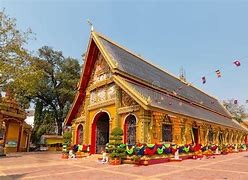
Wat Si Muang is one of Vientiane’s most popular sites of worship, and offers a fascinating insight into how old animist beliefs have blended seamlessly with Theravada Buddhism According to local legend, when the temple was being built in 1563 a young pregnant woman named Si Muang volunteered to sacrifice herself to appease the angry spirits. She threw herself into a hole in the ground where the building’s central pillar was to be placed, and was crushed when the massive pillar was lowered into position. This central pillar also formed the center of the town that was springing up around Wat Si Muang, which to this day is revered as the ‘mother temple’ of Vientiane.
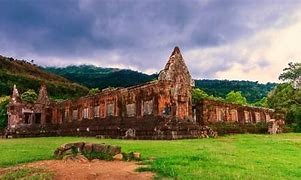
Wat Phou (or Vat Phu, temple-mountain) is a ruined Khmer Hindu temple complex in southern Laos and one of the oldest places of worship in Southeast Asia. It is at the base of mount Phou Khao, some 6 kilometres (3.7 mi) from the Mekong in Champasak province. UNESCO World Heritage Site in 2001
The presence of Buddhism in Lao PDR (People's Democratic Republic) is significant as it is the country's dominant religion and plays a crucial role in the daily lives of the Lao people. The majority of the population in Laos, approximately 70 – 80 %, follows Theravada Buddhism. Additionally, Buddhism has been an integral part of Lao PDR's culture and society for centuries. The country is dotted with numerous Buddhist temples, monasteries, and stupas. These places serve as centers of religious activities, education, and meditation.
At the present day, Buddhism cannot cut off from Lao nation which is like the fish and water. Here are following overviews of Buddhism in Laos:
Overall, Buddhism continues to play a central role in Lao society and culture, despite some challenges. It remains an integral part of the country's national identity and daily life.
Laos possesses its own official Buddhist organization, the Central Buddhist Fellowship Organization of the Lao People’s Democratic Republic, or CBFOL. Since the establishment of this organization in 1958, three issues of Buddhist constitution have been enacted, i.e., the first issue was in 2005, and the second issue was amended in 2019. After its implementation for only one year, it was expeditiously amended on many articles due to its disconformity with Lao current circumstances. Therefore, the third one was amended and issued in 2022 by the Lao Prime Minister.
The two Saṅgha Colleges have been developed under different time dimensions and places. Their historical accounts, therefore, are separately written so as to make a clear overview on them as follows.
The Saṅgha College was initially established in 1929 (BE 2472) by Prince Phetsarath and Somdet Phra Loukeo Uthen Sakda, the Supreme Patriarch of Lao Saṅgha, who was also the governor of Vientiane. Initially it was known as the Pariyatti Dhamma School, and was located in the vicinity of the current Presidential Palace. The school taught Dhamma, Vinaya, Pāḷi, the life of the Buddha, Tham script - the script used to inscribe in palm leaf manuscripts (in the former time both Tham and Lao scripts were officially used in writing system), Lao and Khmer languages, and mathematics. At that time, there were 150 students and 4 teachers.
In 1996 (BE 2539), the Institute was renamed the Saṅgha College and remains this name up to the present. It offers a four -year program, Higher Diploma Degree, which is equivalent to Bachelor Degree. It is divided into two faculties: Faculty of Education and Faculty of Arts, under the patronage of the Ministry of Education, the Lao Buddhist Fellowship Organization and in cooperation with the Lao Front for National Construction. So far, the Saṅgha College has produced 6 batches of 258 students who can teach at Buddhist high schools and work in Buddhist offices in different provinces throughout the country.
Long before the establishment of the Champasak Saṅgha College, Buddhist education has existed and evolved in monasteries from primary up to intermediate levels. With the emphasis on Pāḷi and Dhamma studies, this was more of the case in Champasak District, where there were one primary pariyatti school at Wat Nakhonevanaram and another school was at Wat Yuttidhammadhara (Wat Thong).
Some notable Buddhist educational development took place in the time of Most Venerable Somdet Phra Loukeo Khoun Manivong, the late president of Lao Buddhist Fellowship Organization (LBFO), when he was a provincial governor of Champasak. In 1940 (BE 2483), he established the Pariyatti Dhamma School in Wat Bodhirattanasasadaram (Wat Luang Pakse). The monastic education in the Champasak Province, especially, at Wat Bodhirattanasasadaram flourished even before the nation gained independence in 1975. After the independence, the Pāḷi Schools and the Institute of Buddhist Studies were renamed Buddhist High School whose curriculum were adapted (the form of Buddhist Education had been changed due to many reasons, such as lack of teachers, etc).